Smallville: Background Information

Smallville was created by writer/producers Alfred Gough and Miles Millar, and was initially broadcast by The WB. After its fifth season, the WB and UPN merged to form The CW, which is the current broadcaster for the show in the United States. Smallville premiered on October 16, 2001, and completed its sixth season on May 17, 2007. A seventh season was officially announced by The CW on May 16, 2007, and premiered on September 27, 2007. It is produced in and around Vancouver, Canada.

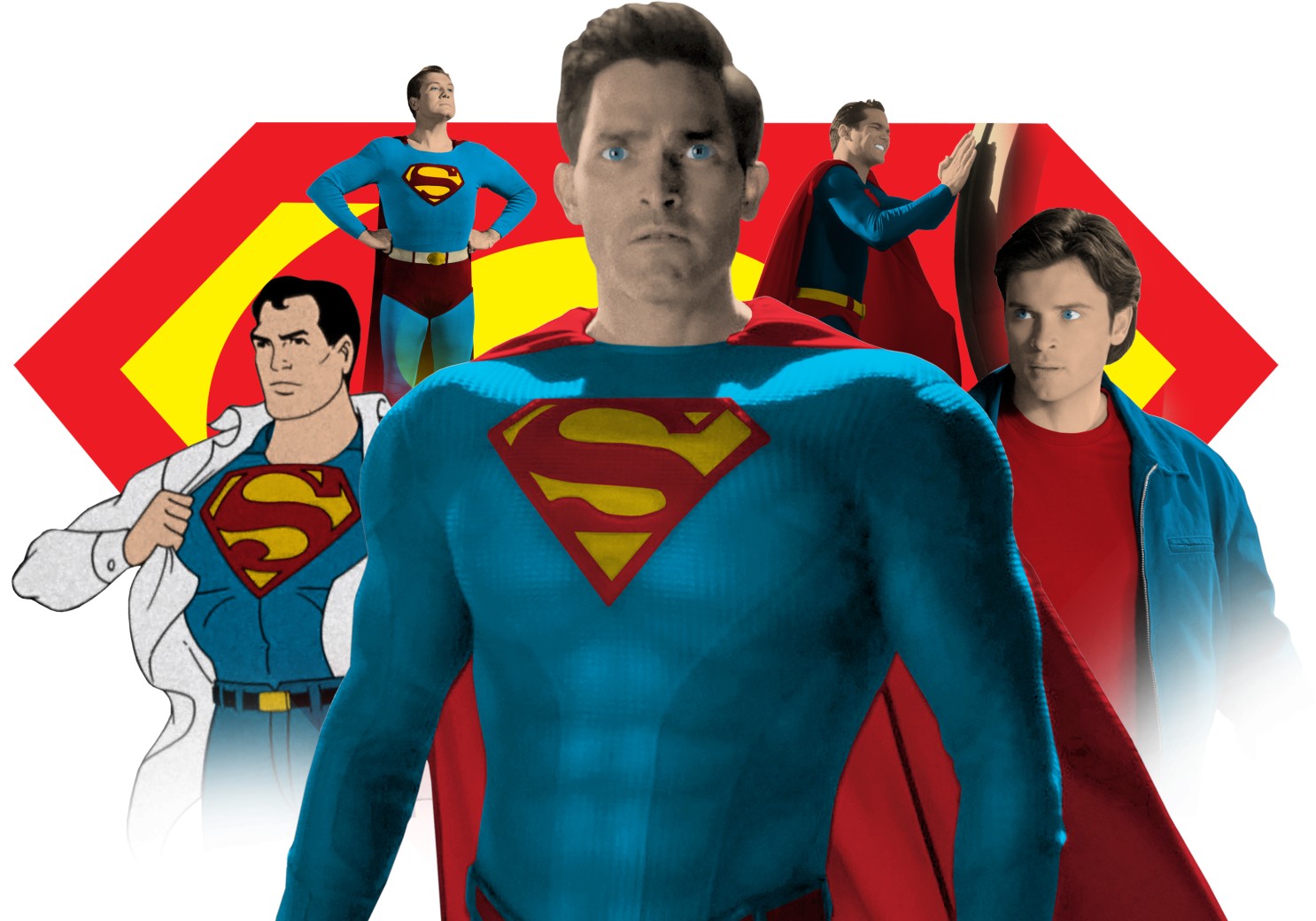
The plot follows the adventures of a young Clark Kent's life in the fictional town of Smallville, Kansas, during the years before he becomes Superman. The first four seasons focused on Clark and his friends' high school years. Since season five, the show has ventured into more adult settings, with some characters attending college. Recent seasons have seen an increase in the introductions of other DC comic book superheroes and villains.

Smallville inspired an Aquaman spin-off pilot, which was not picked up by The CW network, as well as promotional tie-ins with Verizon, Sprint, and Toyota. In other media, the show has spawned a series of young-adult novels, a DC Comics comic book and soundtrack releases. The show broke the record for highest rated debut for The WB, with 8.4 million viewers tuning in for its pilot episode.

Development

Originally, Tollin/Robbins Productions wanted to do a show about a young Bruce Wayne. The feature film division of Warner Bros. had decided to develop an origin movie for Batman, and, because they didn't want to compete with a television series, had the television series idea nixed. In 2000, Tollin/Robbins approached Peter Roth, the President of Warner Bros. Television, about developing a series based on a young Superman. That same year, Alfred Gough and Miles Millar developed a pilot based on the film Eraser. After watching the pilot, Roth approached the two men about developing a second pilot, based on the young Superman concept that was brought to him. After meeting with Roth, Gough and Millar decided that they didn't want to do a series where there was lots of flying, and a cape. It was here that they developed a "no tights, no flights" rule, vowing Clark would not, at any point, fly or don the suit during the run of the show.

Gough and Millar wanted to strip Superman down to his "bare essence", and see the reasons behind why Clark became Superman. Gough and Millar felt the fact that they were not comic book fans played into their favor. Not being familiar with the universe would allow them an unbiased approach to the series. This didn't keep them from learning about the characters; they both did research on the comics and picked and rearranged what they liked. They returned and pitched their idea to both the WB and FOX in the same day. A bidding war ensued between FOX and the WB, which the WB won with a commitment of 13 episodes to start.

Roth, Gough, and Millar knew the show was going to be action oriented, but they wanted to be able to reach that "middle America iconography" that 7th Heaven had reached. To help create this atmosphere, the team decided the meteor shower that brings Clark to Earth would be the foundation for the franchise of the show. Not only does it act as the primary source behind the creation of the super powered beings that Clark must fight, but it acts as a sense of irony in Clark's life. The meteor shower would give him a life on Earth, but it would also take away the parents of the girl he loves, and start Lex Luthor down a dark path, thanks to the loss of his hair during the shower. Roth loved the conflict that was created for Clark, in forcing him to deal with the fact that his arrival is what caused all of this pain.

Another problem the creators had to address was why Lex Luthor would be hanging out with a bunch of teenagers. They decided to create a sense of loneliness in the character of Lex Luthor, which they felt would require him to reach out to the teens. The loneliness was echoed in Clark and Lana as well. Gough and Millar wanted to provide a parallel to the Kents, so they created Lionel Luthor, Lex's father, which they saw as the "experiment in extreme parenting". Gough and Millar wanted a younger Kent couple, because they felt they needed to be able to be involved in Clark's life, and help him through his journey. Chloe Sullivan, another character created just for the show, was meant to be the "outsider" the show needed. Gough and Millar felt the character was necessary so someone would notice the weird happenings in Smallville. She was meant to act as a "precursor to Lois Lane".

The concept of Smallville has been described by Warner Brothers as being a reinterpretation of the Superman mythology from its roots. Recently, since the November 2004 reacquisition of Superboy by the Siegels, there has arisen contention regarding a possible copyright infringement. The dispute is over ownership of the fictional Smallville, title setting of the show, and a claimed similarity between Superboy's title character and Smallville's Clark Kent. The heirs of Jerry Siegel claim "Smallville is part of the Superboy copyright", of which the Siegels own the rights.

Filming

The show is produced at BB Studios in Burnaby. Initially, production was going to be in Australia, but Vancouver had more of a "Middle America landscape". The city provided a site for the Kent farm, as well as doubling for Metropolis. It also provided a cheaper shooting location, and was in the same time zone as Los Angeles. "Main street" Smallville is at a combination of two locations. Portions were shot in the town of Merritt, and the rest was shot in Cloverdale. Cloverdale is particularly proud of being a filming site for the show; at its entrance is a sign which reads "Home of Smallville."

Vancouver Technical School doubled as the exterior for Smallville High, as the film makers believed Van Tech had the "mid-American largess" they wanted. This kept in-line with Millar's idea that Smallville should be the epitome of "Smalltown, USA". The interiors of Templeton Secondary School were used for Smallville High's interior. The Kent farm is a real farm located in Aldergrove. Owned by The Andalinis, the production crew had to paint their home yellow for the show. Exterior shots of Luthor Mansion were filmed at a castle in Victoria. The interior shots were done at Shannon Mews, in Vancouver, which was also the set for the Dark Angel pilot and Along Came a Spider. Movie house Clova Cinema, in Cloverdale, is used for exterior shots of The Talon, the show's coffee house.

Music

Most episodes feature one or more songs by alternative rock acts. Two soundtrack albums were released, with the second following two years after the first. On February 25, 2003, Smallville: The Talon Mix was released. The Talon Mix featured a selected group of artists that supplied music for the show. Following that release, on November 8, 2005, Smallville: The Metropolis Mix was released. It followed the same format, featuring selected artists from the show's music.

Overview

Season one sees the introduction of the regular cast, and storylines that regularly included a villain deriving a power from kryptonite exposure. The one-episode villains were a plot device developed by Gough and Millar. Instead of creating physical monsters, the kryptonite would enhance the personal demons of the character. To prove the show was not simply about a new kryptonite monster every week, the writers attempted to craft episodes that had nothing to do with kryptonite, like "Rogue". The first season primarily dealt with Clark trying to come to terms with his alien origins, and the revelation that his arrival on Earth was connected to the deaths of Lana's parents. Clark develops X-ray vision this season, and, unlike his super strength and speed that he was already aware of, is forced to exercise his new ability to gain control over it.

Season two has fewer villain of the week episodes, focusing more on story arcs that affect each character and explore Clark's origins. Several key plot points include Lex becoming more entangled in conflict with his father, Chloe digging into Clark's past while dealing with Lionel, Martha and Jonathan Kent's financial troubles, and Lana and Clark's vacillating relationship though they end the season apart. The main story arc, however, focuses on Clark's discovery of his Kryptonian origins. The disembodied voice of Clark's biological father Jor-El is introduced, communicating to Clark via his space ship, setting the stage for plots involving the fulfillment of Clark's earthly destiny. Christopher Reeve, who portrayed Superman in the 1970s and 1980s film series, appears as Dr. Virgil Swann to provide Welling's Clark with information regarding his heritage. Season two saw the emergence of heat vision, as well as a new form of kryptonite. Red kryptonite causes Clark to set aside moral compunctions and act out on his impulses and dark desires, unlike green kryptonite, which physically weakens him and could possibly kill him if he is exposed to it for too long.

Season three focuses on loyalty, betrayal, and new revelations involving Jor-El. Early in the season, Michael McKean, Annette O'Toole's real-life husband, portrays Clark's future Daily Planet editor Perry White; from this point on, other major characters present in the Superman mythology and the DC Universe are introduced to Smallville. Pete Ross' inability to deal with keeping Clark's secret causes him to move to Wichita, Kansas with his mother after his parents' divorce. Season three introduced Clark's "super hearing", which developed when his heat vision accidentally blinded him.

Season four ventures further into the Superman mythology by creating a story arc that runs the length of the season; it involved Clark seeking out three Kryptonian stones, at the instruction of Jor-El, which contain the knowledge of the universe. The majority of this season revolves around Lex trying to rekindle a strained friendship with Clark, Lana dating Jason Teague (Jensen Ackles), a young man she meets in France, Clark and numerous other characters vying with one another in attempts to obtain the stones, and Lionel's ambiguous transformation into a good father and person. This season introduced Lois Lane (Erica Durance), Chloe Sullivan's (Allison Mack) cousin, as well as Bart Allen. The season began with the appearance of a new form of kryptonite; black kryptonite held the ability to split Clark into—and merge back together from—two separate beings exhibiting two personalities.

Season five brings in more elements of the Superman mythology, including the Fortress of Solitude, the Phantom Zone, and Zod. The villain Brainiac, in the guise of Professor Milton Fine (James Marsters), becomes a recurring antagonist. The season's central plot revolves around Clark using the knowledge contained in the Fortress of Solitude to train for an impending doom that will befall Earth: the release of Zod from the Phantom Zone due to Fine's machinations. Clark and Lana finally begin a relationship with one another. Season five featured a gradually unveiling storyline in conjunction with multiple minor story arcs running in parallel, mid-season and season finale cliffhangers, and cameos from two other notable DC characters, Aquaman and Cyborg.

Season six takes Clark inside the Phantom Zone, inhabited by a society of exiled criminals from the "28 known inhabited galaxies". The destinies of Lionel and Lex play out in the aftermath of Lex's possession by Zod and Lionel's adoption as the "oracle" of Jor-El. Several prisoners escape the Phantom Zone with Clark. Clark acquires "super breath", after developing a cold from over-exerting himself cleaning up Lex/Zod's destruction in Metropolis, and having no abilities while in the Phantom Zone. DC Comics characters Jimmy Olsen, Oliver Queen (and his superhero alias Green Arrow) and Martian Manhunter are introduced this season, and many of them unite in Smallville to fight a common threat. Clark promises to continue his training, at the Fortress of Solitude, once all the escaped Phantom Zone criminals are either returned or destroyed. Other storylines involve Lana and Lex's marriage, Lex's secret "33.1" experiments, and the introduction of a Clark clone.

Reception

Smallville's first accomplishment was breaking the record for highest rated debut for The WB, with 8.4 million viewers tuning in for its pilot. A common criticism for the first season was the use of "villain of the week" storylines. By the time the first seven episodes aired, at least one journalist had had enough; Pittsburgh Post-Gazette's Rob Owen stated, "Smallville flies high with super character interaction and a nice performance by John Schneider as Pa Kent, but the series needs better plots than the "monster of the week" stories seen so far." Jordan Levin, president of The WB's Entertainment division, recognized the concerns that the show had become a villain-of-the-week series. Levin announced that season two would see more "smaller mini-arcs over three to four episodes, to get away from some of the formulaic storytelling structure we were getting ourselves boxed into... We don't want to turn it into a serialized show." Smallville's first season placed sixth on the Parents Television Council's list of the "best shows for families".

On January 24, 2006, it was confirmed Smallville would be part of the new The CW's Fall 2006–2007 lineup once The WB and UPN ceased separate operations and merged as The CW in September 2006